
When the Lab Conducts Its Own Research
In self-driving labs, KIT researchers are developing new technologies for health, microelectronics, and sustainable energy systems
Self-driving labs (SDLs) represent a new paradigm in research: Autonomous robotics, artificial intelligence (AI), and human expertise are seamlessly integrated, dramatically accelerating research processes. This opens up entirely new perspectives for science. The potential for health research is immense. For example, artificial heart valves have already been produced at KIT using 3D printing at previously unattainable speeds.
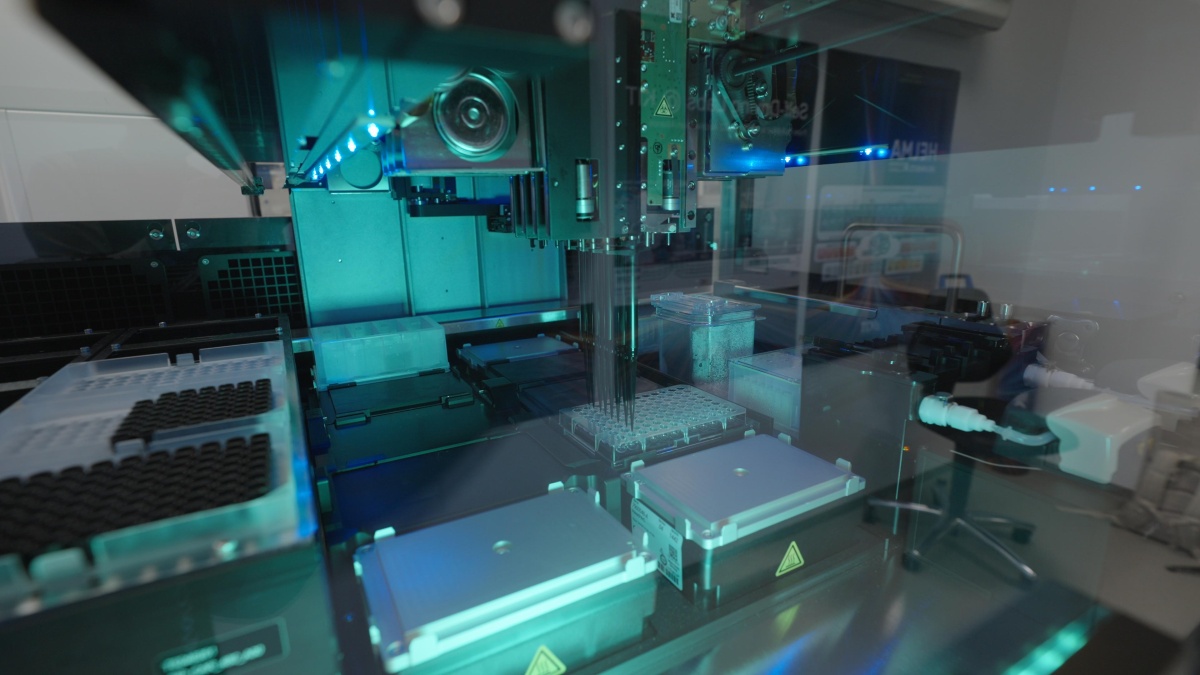
Behind the glass pane, there is constant motion: A robotic arm moves back and forth between incubators and analytical instruments, transferring microtiter plates in which stem cells mature into artificial tissue. Blue LEDs blink on the white enclosures. Clearly, intensive work is underway, yet no one is in sight.
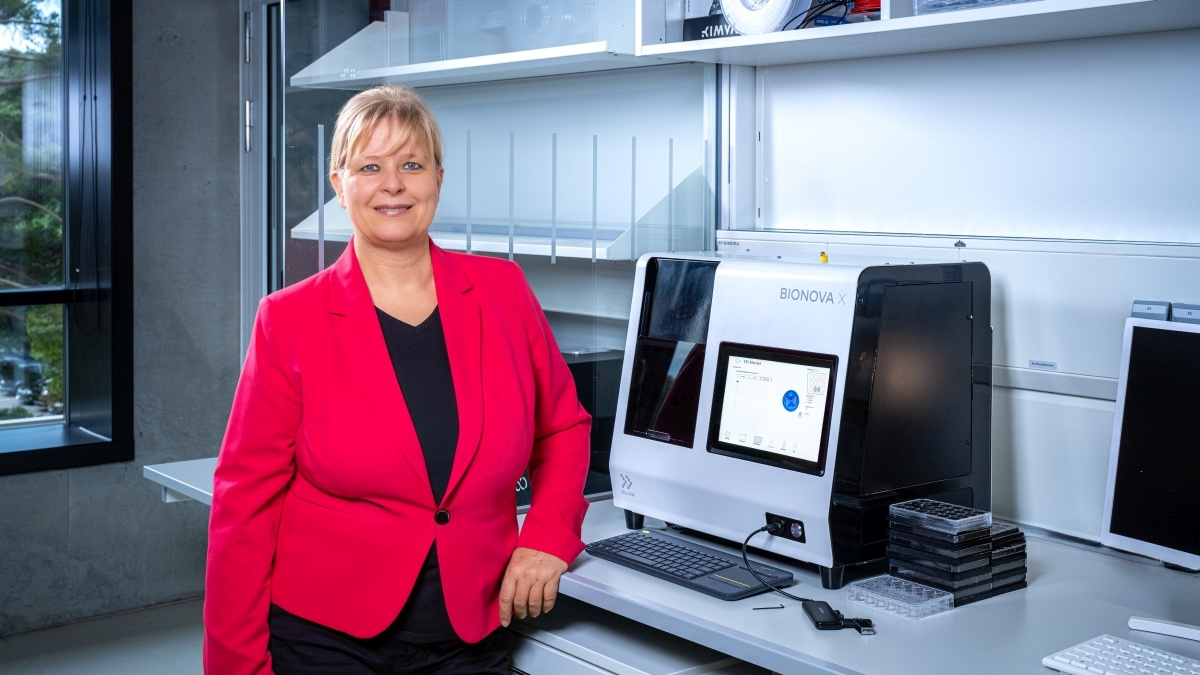
The system running here in the SDL for Biomaterials and Tissue & Organoid Research at KIT operates with virtually no human intervention. Networked devices and digital systems independently conduct experiments, while AI models plan and control the processes.
“The machine decides which steps to perform next, based on data it has previously generated, modeled, or independently gathered,” explains Professor Ute Schepers. At KIT’s Institute of Functional Interfaces (IFG), she leads the research group Chemical Biology of Precision Biomaterials. Together with an interdisciplinary team, she is bringing to life a vision that would have sounded like science fiction just a few years ago: Research laboratories that operate largely autonomously.
21 Self-driving Labs at KIT: Accelerating Research
The facility, which went into operation in 2025 on the third floor of the ZEISS Innovation Hub at Campus North, is one of now 21 SDLs at KIT. These laboratories are part of the Helmholtz Acceleration Alliance HELMA, a network of autonomous research platforms for health, energy, and materials technologies. Since 2020, SDLs have been established in Karlsruhe in fields such as health technologies and biomedical engineering, as well as in accelerated materials research – for example for sustainable energy systems, catalysis, microelectronics, and computing.
“We face the challenge of replacing existing materials with more sustainable alternatives,” says Schepers, “and we must do so at a pace that conventional materials research cannot match without the use of robotics and AI. That is why SDLs are so important.” At the same time, she notes, applications are becoming increasingly complex, while the number of possible material combinations and experimental variations continues to grow. “The rapid progress of large AI models and agent-based AI capable of autonomous planning and action is now providing the decisive boost,” the researcher adds, emphasizing KIT’s leading role in the development of autonomous research platforms. “The system we use for our cell culture research is one of only three of its kind worldwide.”
Robotic Delivery on Demand
The SDL for Biomaterials and Tissue & Organoid Research demonstrates just how far the concept of autonomous research has already advanced: Scientists simply define a goal, and the machines develop a strategy and independently organize everything needed for implementation – such as chemicals. To do so, the system communicates with its digital counterpart in another SDL at KIT. This counterpart produces the required materials and, with the help of robotic arms, loads them onto an autonomous mini-cart, which makes its way across campus without human intervention. For longer distances, it can hitch a ride on a self-driving shuttle bus. In the future, drones are expected to take on transport tasks as well.
Within the digital brain of an SDL, complex simulation and data analysis loops run continuously. The AI evaluates results, proposes material combinations, and initiates series of experiments. If a material proves unsuitable, the system simply starts over – far faster and more systematically than a human, as it can simulate and test hundreds of variants simultaneously.
3D-printed Heart Valves
Using this approach, Schepers’ team developed tiny heart valves for infants with severe congenital heart defects, which can be produced via 3D bioprinting. The basis is a biotechnologically produced collagen-like material that has been modified within the SDL to make it stable enough for printing. These artificial heart valves, which are still in the patent phase, are designed to grow along with the child’s own tissue. “In the past, such a development would have required an entire doctoral thesis,” says Schepers. “Now we can accomplish key steps in a matter of months.”
Human Verification and a New Role
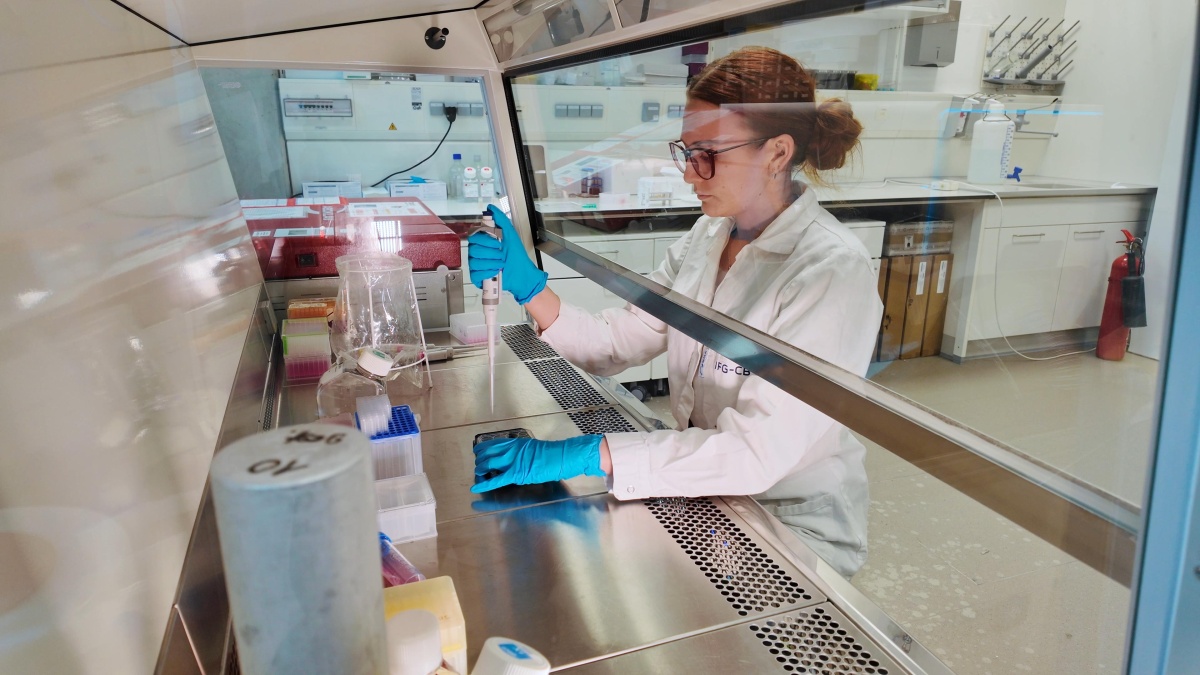
Despite all technological advances, the guiding principle remains: Human in the loop. The specific points at which researchers intervene in the processes are precisely defined. “The autonomous system generates proposals, and we verify the results to ensure it does not go off track,” says Schepers. Explainable AI and trustworthy AI models play a crucial role, ensuring that decisions remain transparent and comprehensible.
This fundamentally changes the role of scientists. Instead of spending hours pipetting, their work shifts toward conceptual design, programming, and process control. “And my team truly enjoys that,” Schepers notes, emphasizing: “The systems sometimes make decisions that differ significantly from ours and identify patterns that we might never have discovered. Perhaps this will allow us to venture into entirely new realms of research that we haven’t even considered yet.”
Christoph Karcher, July 6, 2026
Translation: Dipl.-Übers. Veronika Zsófia Lázár
Medicine of the Future
Issue 2/2026 of the research magazine lookKIT is dedicated to the theme of the Science Year 2026.
To the magazine