
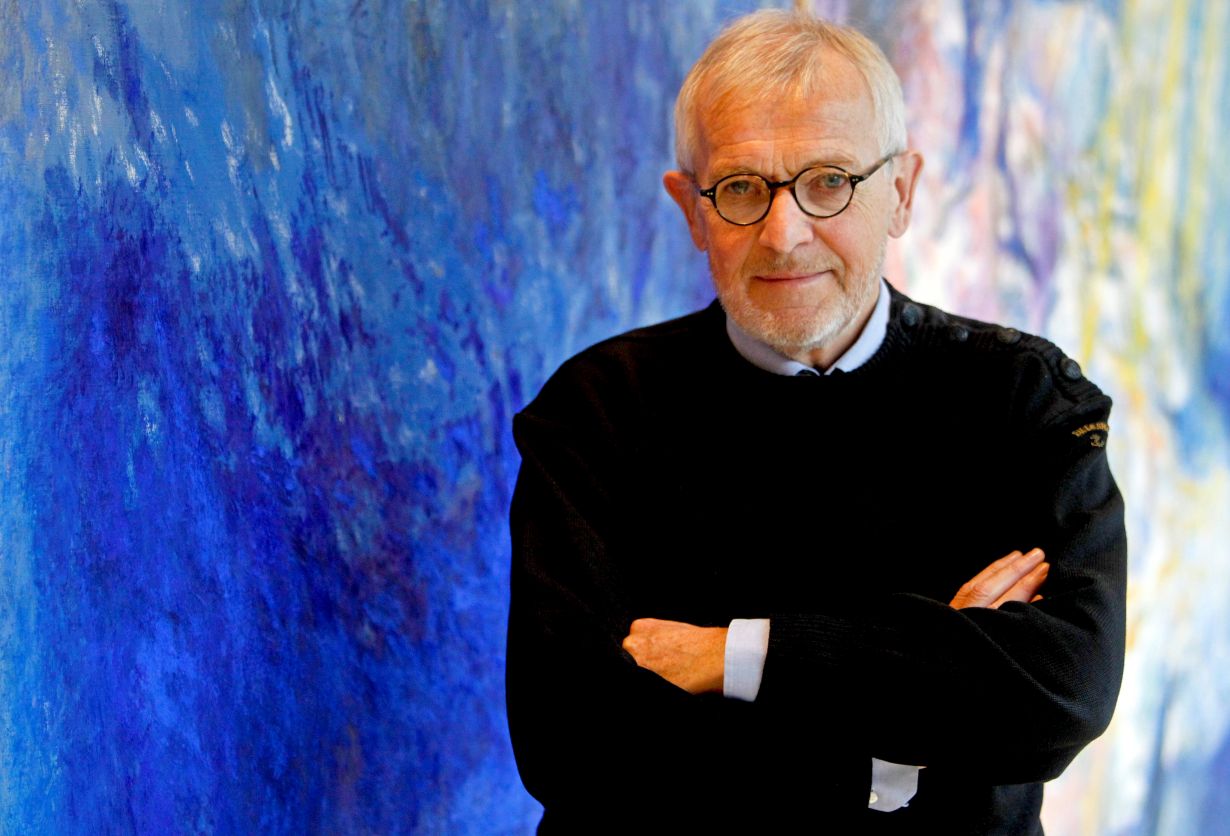
Francis Halzen receives the 2017 Julius Wess Award of the Elementary Particle and Astroparticle Physics Center (KCETA) of Karlsruhe Institute of Technology (KIT). The born Belgian teaches at the University of Wisconsin-Madison, USA. Halzen is granted the award for his work in the areas of cosmic rays and neutrino physics and in particular for his initiative to build the AMANDA neutrino detector and his commitment to the much larger follow-up project IceCube, both of which are situated directly at the South Pole. Representatives of the media are cordially invitied to come to the award ceremony on April 20, 2018, 3:00 p.m.
[…]
Program of the ceremony (in Englisch)
15:00 hrs
Welcome Speeches
Professor Oliver Kraft, KIT Vice President for Research
Professor Marc Weber, Spokesperson of the KIT Center KCETA
15:20 hrs
10 Years Julius Wess Award
Professor Johann Kühn (KIT)
15:30 hrs
Lecture: High-Energy Multi-Messenger Observations
Professor Elisa Resconi, Technical University of Munich
16:45 hrs
Laudation
Professor Johannes Blümer, KIT
17:30 hrs
Lecture
IceCube: Opening a New Window on the Universe from the South Pole
Professor Francis Halzen, University of Wisconsin-Madison
In close partnership with society, KIT develops solutions for urgent challenges – from climate change, energy transition and sustainable use of natural resources to artificial intelligence, sovereignty and an aging population. As The University in the Helmholtz Association, KIT unites scientific excellence from insight to application-driven research under one roof – and is thus in a unique position to drive this transformation. As a University of Excellence, KIT offers its more than 10,000 employees and 22,800 students outstanding opportunities to shape a sustainable and resilient future. KIT – Science for Impact.