
KIT Highlights Its Leading Role in Fusion Research
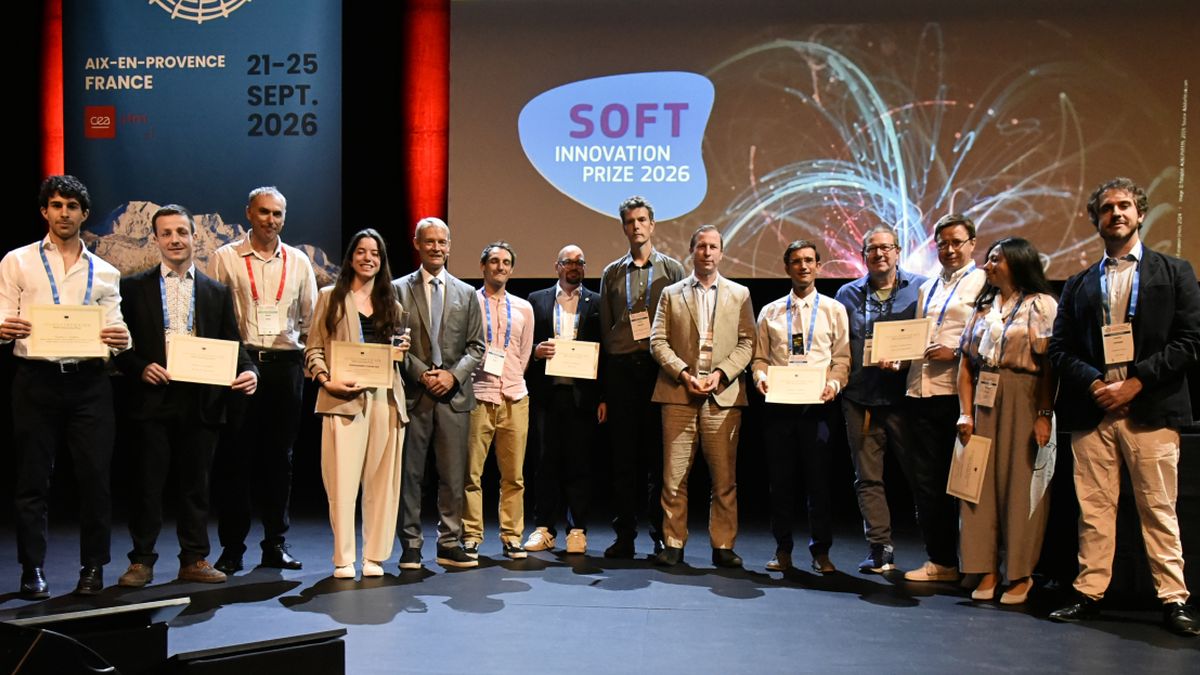
In its High-Tech Agenda, the German federal government identifies fusion energy as one of six key technologies of the future. As one of the leading fusion research institutions in Germany and worldwide, Karlsruhe Institute of Technology (KIT) is therefore also home to a federal research hub for fusion technology. KIT has now further underscored its leading role by winning awards at this year’s Symposium on Fusion Technology (SOFT).
A Compact Measurement System and Efficient Plasma Heating
The European Commission awarded the SOFT Innovation Prize to the microRaman team at the Tritium Laboratory Karlsruhe (TLK). The researchers developed a measurement system capable of analyzing all six molecules that can be formed from the hydrogen isotopes protium, deuterium, and tritium without physical contact and during ongoing operation. With user-friendly software and compact hardware, microRaman (µRa) took third place among more than 20 renowned submissions from various countries worldwide. The system is already available on the international market to support the growing fusion community with reliable, off-the-shelf measurement technology.
Dr. Benjamin Ell from the Institute for Pulsed Power and Microwave Technology at KIT was also successful with his team. The researchers received seventh place for their contribution to plasma heating. For a fusion power plant to operate at all, the plasma must be heated to more than 100 million Kelvin. In the GyroMDC project, the team developed a novel multistage collector for gyrotrons, which heat the fusion plasma using microwaves. The new technology can significantly improve the efficiency of gyrotrons. This means lower power consumption and, consequently, better conditions for more economical operation of future fusion power plants.
era, October 7, 2026