
ERC Funding Brings Research into Application
The European Research Council (ERC) is supporting Karlsruhe Institute of Technology (KIT) with two “Proof of Concept” grants for medical diagnostics and materials development. The funding supports projects that aim to translate basic research into practical applications. Over the next 18 months, 150,000 euros will be provided for each project.
Detecting Multiple Disease Markers at Once
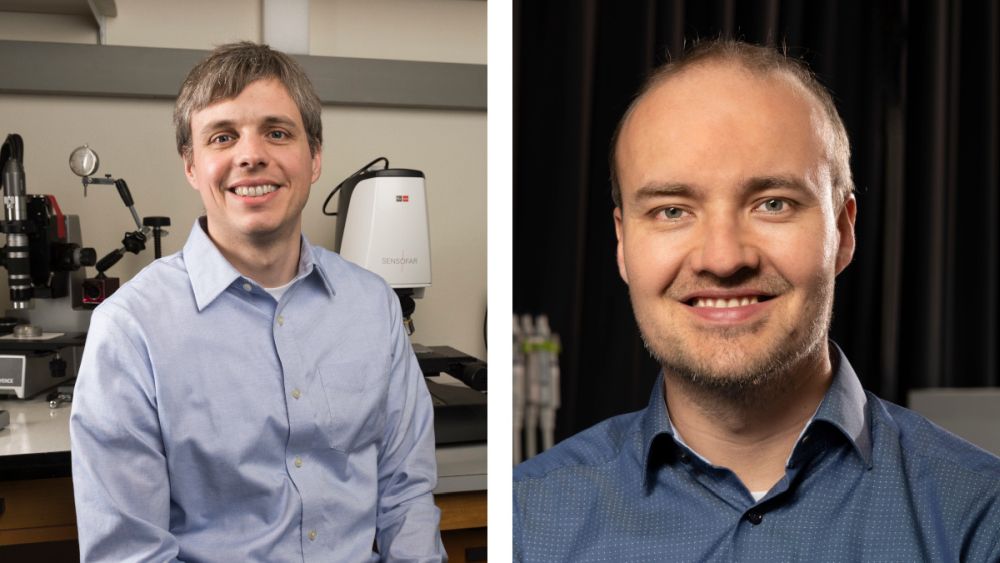
Chemist Dr. Frank Biedermann was successful with his “SupraPlate” proposal. Together with his team, he is developing small sensor plates for medical diagnostics. In the future, these will be able to detect several bioactive molecules at once. These molecules, such as chemical messengers and metabolic “fingerprints”, provide important clues about diseases in humans or plants. Until now, they could only be detected using highly complex and specialized laboratory equipment.
Tireless Movement Thanks to New Alloys
The second Proof of Concept at KIT supports the development of new materials: Roller bearings facilitate almost any movement by means of rollers or balls and reduce friction. Whether in mechanical engineering, energy supply, or medical technology, these components are indispensable. However, bearings wear out quickly under high loads. With his SOAR project, Professor Christian Greiner aims to design a new class of copper-based alloys whose microstructures are naturally resistant to friction and wear.
Both researchers can continue their long-standing research with the new funding. Greiner received an ERC Consolidator Grant in 2017 for investigating the friction behavior of metals. Biedermann received the same grant in 2022 for his research on biosensors.
iha, February 4, 2026