
Quantum Computers: Strong Magnetic Field Focuses Qubit Like a Magnifying Glass
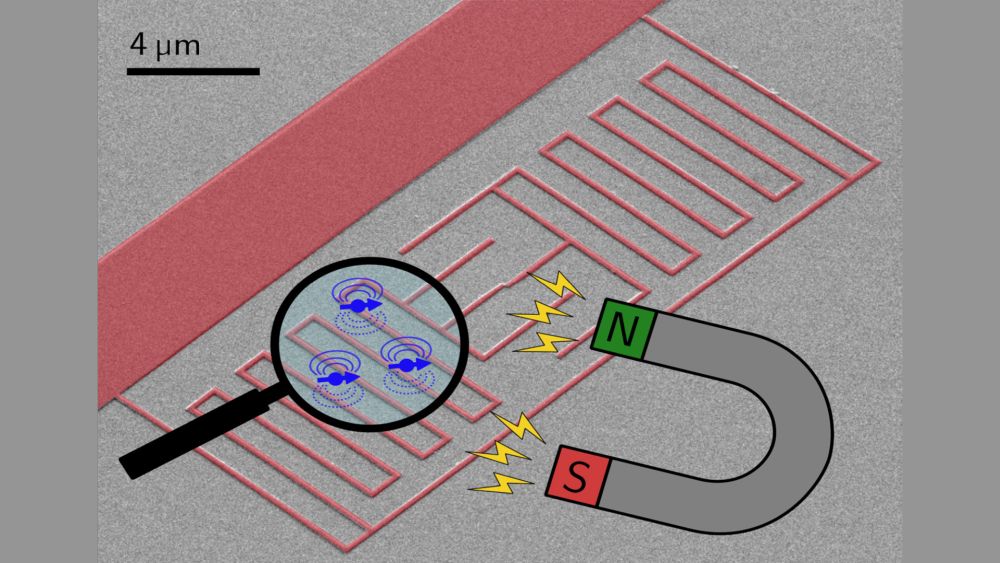
Quantum computers promise to solve highly complex problems in the future, for example in the development of new materials or medicines. They process information using qubits, which can exist in many different states simultaneously. Superconducting circuits that exhibit no electrical resistance at low temperatures are considered promising qubits. However, strong magnetic fields can impair quantum properties. Researchers at the Karlsruhe Institute of Technology (KIT) have now developed a superconducting qubit that remains stable even in strong magnetic fields. They report their findings in the journal Nature Communications.
Qubit Serves as a Sensitive Sensor
“A high-field-tolerant qubit serves as a sensitive sensor to characterize magnetic defects in new materials, thin films, or chips,” explains Professor Ioan M. Pop from the Institute for Quantum Materials and Technologies (IQMT) at KIT. The qubit presented is a fluxonium that can maintain its quantum state despite a strong external magnetic field, with a nanocontact made of granular aluminum. The researchers use this qubit to directly visualize a crucial source of loss in the operation of quantum computers, namely noise in the magnetic field. “We use the strong magnetic field to focus the qubit like a magnifying glass, so to speak,” explains Dr. Simon Günzler from IQMT. With every reduction in noise, quantum computers move closer to being used in research and industry.
or, December 3, 2025