
AI for the Energy Transition? It Will Take More than just ChatGPT!
Shifting his focus from the universe to energy systems, tenure-track professor Benjamin Schäfer has changed from a theoretical physicist to a multi-award-winning AI scientist. At KIT, he aims to drive the energy transition by providing understandable AI models.
In a library of the Max-Planck-Institute in Potsdam, 23-year-old Benjamin Schäfer experienced a moment that turned his life upside down: "Back then, I was a student of theoretical physics. Sitting in front of my laptop, thick books by my side, I was shifting mathematical objects from left to right to work on an extension of the general theory of relativity. Then, I suddenly thought: No. I don't want this any longer. I want to do something that has a direct impact on this world.”
13 years later, he still does not regret this decision. As a tenure-track professor working in the “Data-driven analysis of complex systems” research area at KIT’s Institute for Automation and Applied Informatics (IAI), Schäfer, who is nearly 2 meters tall, no longer squeezes his legs under a library table, but rather cycles roughly 100 kilometers per week to move between Campus South and Campus North. At Campus South, he presents a lecture on data science and artificial intelligence (AI) in energy systems, at Campus North, he works with his research group on AI models intended to drive the energy transition. “Climate change is the biggest crisis we currently have to manage as humankind. I don’t want to be just a bystander, but make a positive contribution,” said Schäfer, the father of a two-year-old child.
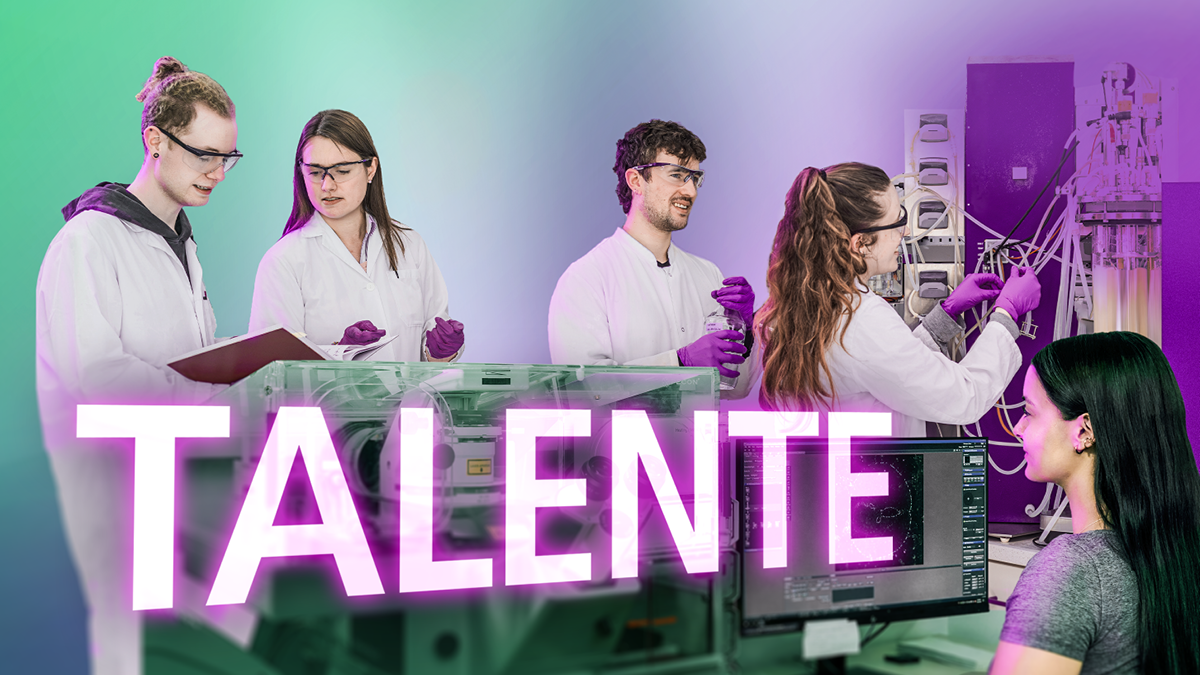
Issue 3/2026 of the research magazine lookKIT is dedicated to young researchers at KIT.
To the magazineUnderstanding, Controlling, and Optimizing AI
His aim is to make AI applications “explainable”. For him, there are three aspects to this. First of all: Gaining a better understanding of the models. Secondly: Experimenting with them and learning to control their parameters. Thirdly: Optimizing the use of the energy systems based on transparent AI methods. “To date, these models are still black boxes,” said Schäfer. This means that it is not clear how the algorithm arrives at a certain result. Schäfer, however, wants to know whether the AI system has taken the price of electricity or the daylight into consideration when calculating the household consumption or the grid load – only then, can he trust the AI results and make targeted readjustments. This could make our energy system, which increasingly has to cope with fluctuating power supplies from renewable sources, more stable and also more reliable in the medium term. Together with his research group, Schäfer recently presented a model that predicts electricity consumption and prices for one week. Right from the outset, the algorithm was trained to provide particularly meaningful explanations.
Understandability of an AI is not important on just the technical side: “People must be able to understand how the AI forecasts and decisions come about. Especially in the critical field of energy, where errors can have serious consequences, transparency and human supervision are crucial – and the European Union’s AI Act actually mandates them.”
Data from Cars and Balconies
The struggle for new AI systems not only presents software code issues, but also logistical challenges for the 36-year-old expert. While energy data is available in abundance, thanks to the commercial and decentralized nature of electricity production and consumption, Schäfer must first find it and compile it.
Sometimes, the power sources are located far away from the consumers, such as offshore wind turbines; other times, solar panels supply electricity generated directly on rooftops and balconies. The power supplied to the grid comes either from classical energy providers or from private persons. Electric vehicles, heat pumps, and battery storage units change consumption patterns. However, much of this information is kept confidential by the energy companies – for competitive reasons or because it reveals critical insights about the country’s critical infrastructure.
“On the one hand, we are forced to use data sets that are outdated, but at least available. On the other hand, there are many potential data sources we cannot evaluate at all: This is a blatant paradox and an enormous challenge,” said Schäfer. The methodological foundations, which are currently used by the core of the AI community, cannot be transferred one to one to energy systems.
Many Heads to Answer a Big Question
To fill this gap and develop better AI solutions for the energy transition, the tenure-track professor deliberately relies on an interdisciplinary team. He works with experts from mathematics, electrical engineering, and computing science.
Could this be linked to his fondness for cooperative board games? Laughingly, Schäfer said: “What I like about these games is that you pull together to master a common challenge. And a basic trait of mine is a certain quest for harmony. Everybody in my research team can learn much from all the others. What used to fascinate me about physics were the complex systems. To solve complex problems such as the energy transition, we need a variety of access points and different solution schemes.”
The proximity to KIT’s Energy Lab on Campus North is therefore an essential element for Schäfer. His colleagues from Europe’s leading research platform for a sustainable energy future provide topical data from the model houses and solar farms they operate, develop measuring instruments, and stay in close contact with grid operators. All this helps when it comes to obtaining more realistic energy data.
Closeness to Industry Wanted
Schäfer already has received several awards for his research. What is more, his Helmholtz Investigator Group was rated as “extraordinarily successful.” His aim is to intensify collaborations with energy providers to predict and secure grid stability on the basis of AI models.
When asked about his change of life 13 years ago, his answer comes quickly: “I’m still not doing research that results in a mass product, but it's at least closer to application. And I do believe that I'm making a positive contribution to the world with it.”
Isabelle Hartmann, November 5, 2026
Translation: Fachübersetzungen Hunger/Altmann GbR
