
Digital Twins Make Spinal Surgery Safer
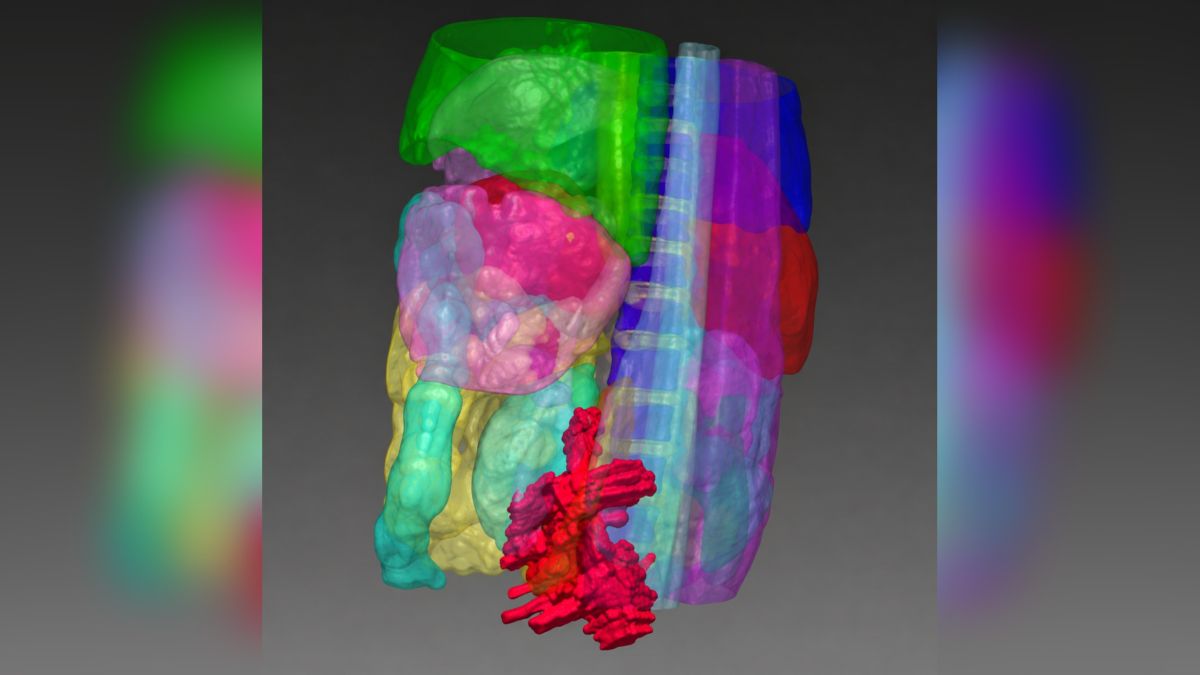
Spinal tumor surgeries are complex and involve significant risks. To improve the planning of such procedures, Karlsruhe Institute of Technology (KIT) is participating in the IntelliSpine-Recon research consortium. Coordinated by Heidelberg University, the project is developing a prototype for an assistance platform that uses a digital twin to help surgeons prepare for spinal surgeries and reduce risks.
Haptic Feedback for Surgical Planning
The digital spinal twin is based on the patient’s medical imaging data, laboratory findings, and information on the patient’s medical history. The AI-supported model displays bones, tumors, nerves, and blood vessels and highlights particularly sensitive areas. Surgeons can use it to test various surgical scenarios and identify safer approaches for accessing the tumor. The training environment also includes haptic feedback: When a virtual instrument approaches critical structures such as the spinal cord, nerves, or blood vessels, resistance becomes palpable. This allows potential risks to be identified and practiced before the actual procedure.
“Everything the surgeons learn from the digital tools goes directly into further development, so that real operations can be performed more safely and with as few complications as possible. This creates a closed-loop learning cycle”, explains Dr. Balint Varga whose research group at KIT’s Institute of Control Systems develops components for virtual surgical simulation and haptic feedback. In addition to simulation data, clinical course data on spinal tumors and results from patient surveys are also incorporated into the development process.
The Federal Ministry of Research, Technology, and Space (BMFTR) is funding the project with a total of approximately 1.6 million euros.
lkr, November 11, 2026