
Soil Mechanics: Robots Prepare Sand Samples for Laboratory Testing
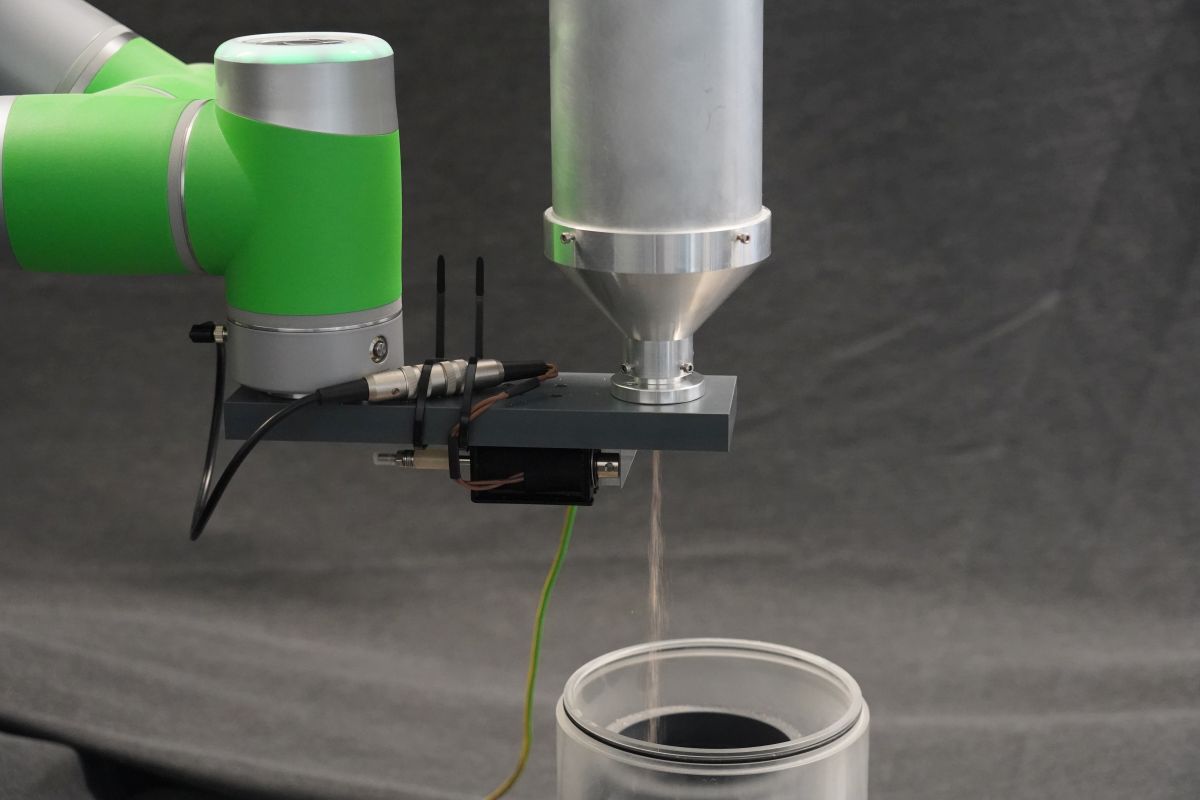
Whether for buildings, roads, bridges, or tunnels, geotechnical investigations are a prerequisite for nearly every construction project. These tests help engineers determine how soil behaves under load. Researchers at the Karlsruhe Institute of Technology (KIT) have now developed a fully robotic approach to the automated preparation of sand samples for laboratory testing. Their study, published in Acta Geotechnica, demonstrates that a robot can produce test specimens more uniformly and with greater consistency than a human operator. The result is more reliable soil mechanics testing and yields more comparable results.
Prospects for Self-Driving Laboratories in Civil Engineering
“Our study opens up perspectives for self-driving laboratories in civil engineering,” says Professor Hans Henning Stutz, Head of the Institute of Soil Mechanics and Rock Mechanics at KIT. In the future, such automation could help reduce both time and costs.
For the study, the researchers used a six-axis robot to deposit sand into a specimen mold through a single nozzle. More than 80 sand specimens were produced from two different types of sand. The team then evaluated density distributions within the specimens at more than 1,000 measurement points. Compared with specimens prepared manually, the robot-produced samples showed significantly better uniformity and reproducibility. The robotic method also makes it possible to systematically investigate individual process parameters, including movement patterns, nozzle diameters, drop heights, and deposition speeds.
or, June 16, 2025