
Shielding Quantum Circuits From Light and Heat
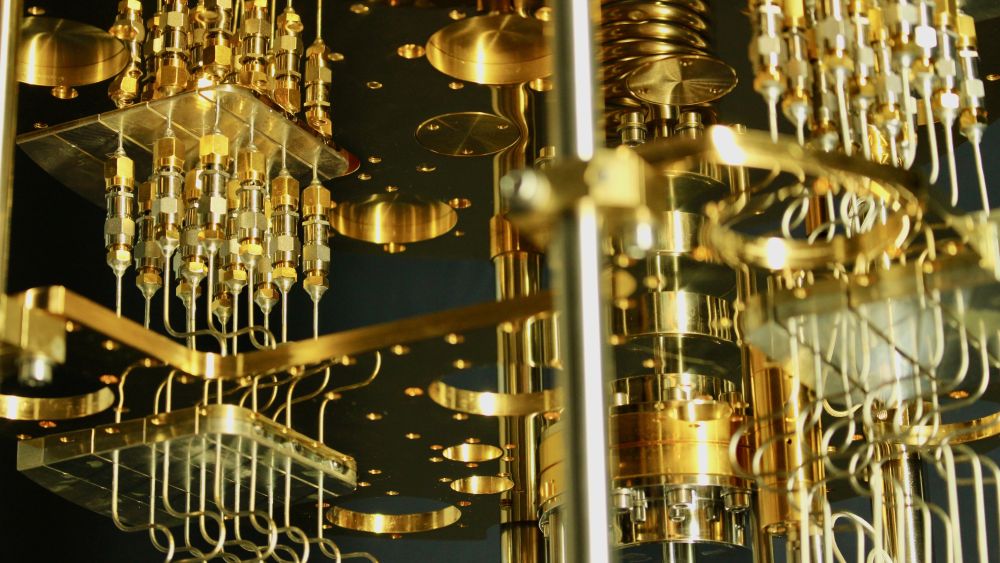
Superconducting circuits are important building blocks for quantum technologies that could enable new applications in medicine and materials research. Near absolute zero, they are particularly sensitive to light and infrared radiation and therefore require reliable shielding. Researchers at Karlsruhe Institute of Technology (KIT) have now developed a material that attenuates this radiation while transmitting the microwave signals used to read out the circuits.
Sapphire Spheres Filter Radiation
“Thermal interference radiation spans a wide range of wavelengths – which makes it difficult to shield against,” explains Dr Hannes Rotzinger from the Institute for Quantum Materials and Technologies (IQMT) at KIT. The team therefore developed a non-magnetic material made from epoxy resin and sapphire spheres of different sizes. When unwanted radiation encounters spheres with a diameter similar to its wavelength, it is scattered or absorbed. The researchers calculated the size and distribution of the spheres so that they suppress radiation across many wavelengths while allowing microwave signals to pass through largely unaffected.
Measurements confirm the material’s properties. “The prototype significantly attenuates infrared radiation and transmits signals below ten gigahertz at extremely low temperatures with a loss of less than 0.4 decibels,” says first author Markus Griedel from IQMT. Next, the team aims to investigate other parts of the low-temperature environment, such as the connected signal lines.
The research was conducted as part of the "Qbriqs" project, which is funded by the Federal Ministry of Research, Technology and Space.
ihe, May 28, 2026