
State of Baden-Württemberg Funds Quantum Technology Demonstrators
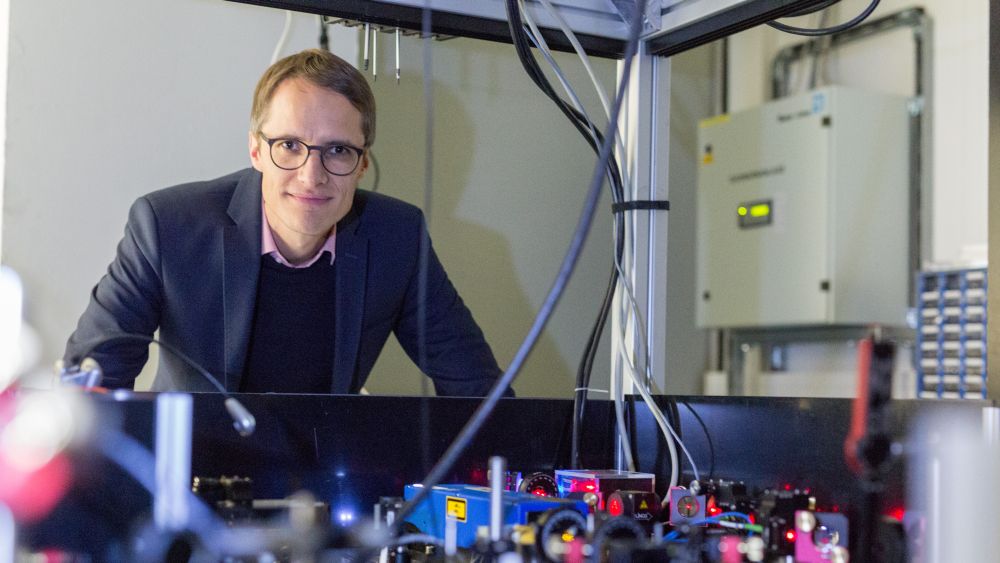
Whether enormous computing power, ultra-precise sensors, or state-of-the-art encryption: quantum technologies promise groundbreaking applications. They use the unusual rules of quantum physics to develop novel technological systems. The state of Baden-Württemberg is now funding the development of demonstrators in quantum sensor technology and communication.
As part of the state's new funding line “Transfer Booster for Quantum Technology Demonstrators,” eleven selected projects are now to be transferred into prototypes, applications, and markets. The Ministry of Science, Research, and the Arts and the Ministry of Economy, Labor, and Tourism are financing these projects with a total of 4.2 million euros. The Karlsruhe Institute of Technology (KIT) is involved in two of the eleven projects.
AURORA
In the project “Quantum-Enabled Polarization of Metabolites in Microfluidic Human Cell Culture” (AURORA), a research group led by Dr. Sylwia Barker at the Institute of Microstructure Technology at KIT is developing a biocompatible quantum sensing platform to analyze cancer metabolism in human-relevant in vitro models. This platform is designed to provide non-invasive readouts of treatment response, supporting the evaluation of therapeutic efficacy and contributing to the development of alternative, animal-free testing approaches in drug research. The project will be run together with Professor Marcel Utz (also IMT) and NVision Imaging Technologies GmbH from Ulm.
TRIQ
The project “Transfer and Integration of Thin-Film Lithium Niobate for Quantum Communication” (TRIQ) is based at Heidelberg University. Project partners are the quantum startup LinQ and the working group of Professor David Hunger at the KIT Institute of Physics. The partners are investigating further developments and field demonstrations of components for quantum communication, in particular the development of improved transmitter units for quantum keys. These are based on novel photonic integrated modulators that enable more efficient transmission.
jho, February 19, 2026