
As engineers, we stand for key innovations and systems in the topics of energy, mobility, production, automation, human-machine interaction, information technology and medical technology that are central to our environment and society.
KIT Engineering
Facts and Figures
34 institutes, 2,500 employees, 115,000,000 EUR (2025) third-party funds acquired, 10 Start-ups (2025), 2 departments, 12 study programs, 6,528 students, including 2,770 international students, 1,162 doctoral students





Higher Education
Our degree programs have been at the forefront of German higher education for many years thanks to their combination of theory, research, innovation and practical application.
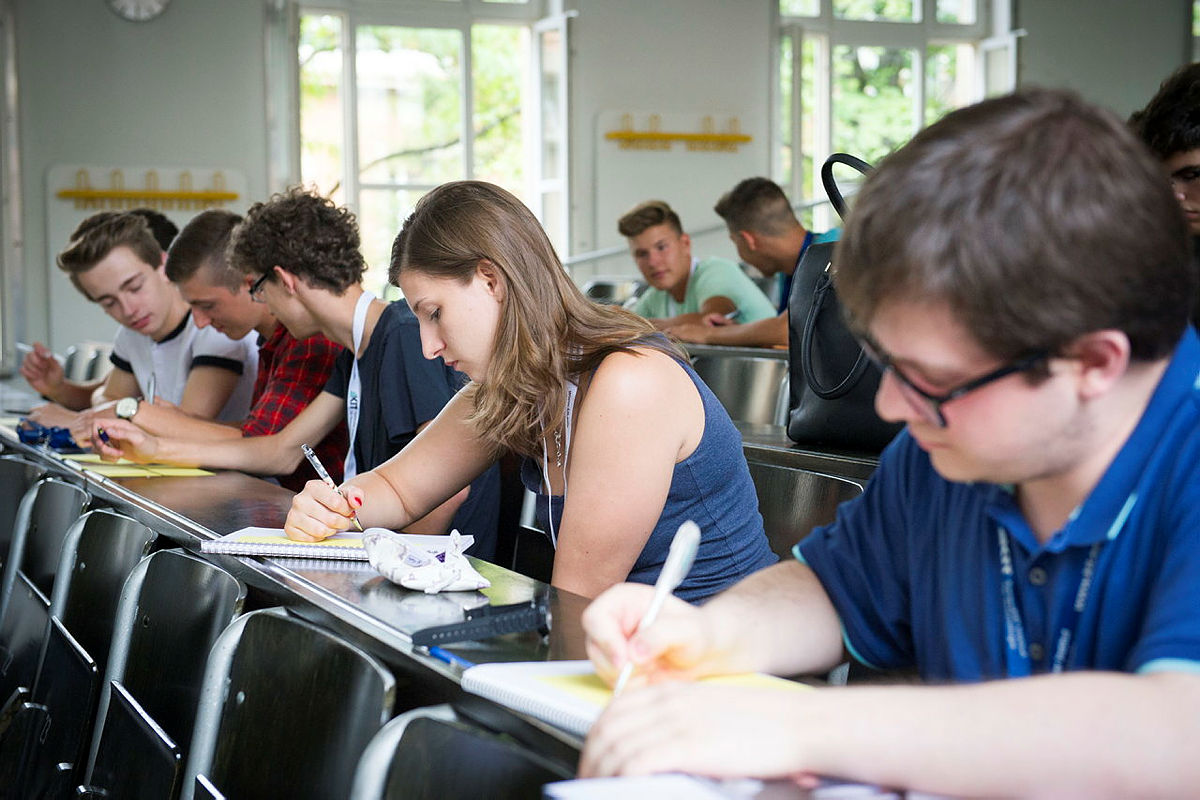

We welcome our students as the 2026–27 winter term begins. The numbers of first-year students are encouraging. For the current semester, a total of approximately 1,350 students—including 930 bachelor’s and 420 master’s students—have enrolled in one of our degree programs at the Department of Electrical Engineering and Information Technology and the Department of Mechanical Engineering. Division 3 is delighted by the great interest in its study programs and wishes all students—especially first-semester students—a successful start, exciting encounters, and a wonderful time at KIT.

At the 2026 Transformation Summit, the InnovationCampus Future Mobility (ICM), the Stuttgart Region Economic Development Corporation, and other partners demonstrated how research generates industrial value for the automotive and mechanical engineering sectors. Artificial intelligence, digital twins, and software-defined vehicles are opening up new opportunities for manufacturing and mobility. For companies, the key question here is how technologies can be quickly put into practical use. At the invitation of the InnovationCampus Future Mobility (ICM) and the CARS 2.0 Transformation Network – coordinated by the Stuttgart Region Economic Development Corporation (WRS) – more than 300 participants discussed new knowledge transfer formats, digital production solutions, and international technology partnerships.
More Information: News ICM
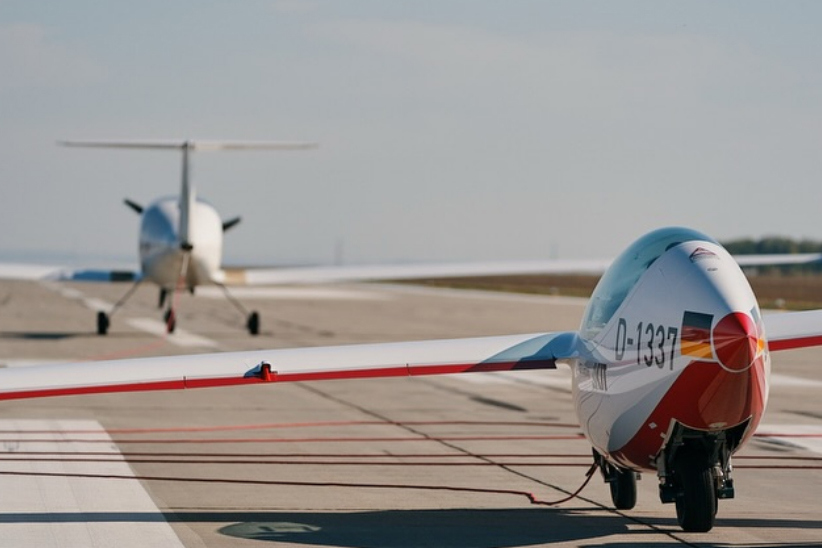
We congratulate the Akaflieg at KIT on the successful maiden flight of their tailless glider, the AK-X. On September 30, the aircraft took off for the first time at the Giebelstadt airfield. Under the patronage of the ISTM, more than 100 KIT students developed and built the AK-X over a period of more than 15 years alongside their studies and on a volunteer basis. The ISTM and Akaflieg share a close partnership, which has been further strengthened under the leadership of Prof. Dr.-Ing. Bettina Frohnapfel, who is also an honorary member of Akaflieg. The joint “Aerodynamics” lecture is a highlight of this long-standing collaboration. A detailed report on the maiden flight can be found in the Akaflieg blog post at https://akaflieg-karlsruhe.de/die-ak-x-fliegt/

On Monday and Tuesday, September 21 and 22, the seventh Hydrogen Engine Conference, “H2ICE + REFUELS 2025,” took place at the Karlsruhe Congress Center. Through numerous technical presentations, participants had the opportunity to expand their knowledge in the hydrogen engine division and ReFuels. The conference was held under the provocative theme “H2ICE or ReFuels?” In addition to technical aspects, the presentations explored social, political, and international market-based perspectives on these promising future technologies. Furthermore, the first day of the event featured a 45-minute panel discussion moderated by Dr. Holger Ohmstedt (Head of the NDR Business News Department) with Mr. Peter Metzinger (Mr. Campaigning AG).

The teams led by Professor Christian Koos, Dr. Philipp Dietrich, and Dr. Matthias Lauermann have been nominated for the German Future Award by the Federal President.
At the Institute of Photonics and Quantum Electronics (IPQ) and the Institute of Microstructure Technology (IMT) at KIT, the three nominees have found new ways to meet the growing demand for fast and efficient data exchange.
To achieve this, they are relying on light instead of electricity. Their new methods make it possible to efficiently test optical microchips and precisely integrate them into high-performance systems. These innovations have been brought to industrial application through the KIT spin-offs Vanguard Automation and Keystone Photonics. In this way, they contribute to faster, more scalable, and more energy-efficient data processing.
KIT press release

Two early-career researchers from Karlsruhe Institute of Technology (KIT) have been successful in the latest call for Starting Grants from the European Research Council (ERC): In the COOLWEAVE project, Dr. Jingyuan Xu is developing a climate-friendly cooling technology. In the DATAARK project, Dr. Maryia Rusak is investigating how a classification system for building information developed across Europe after the Second World War and influenced major architectural projects. The two five-year projects will each receive EUR 1.5 million in funding.